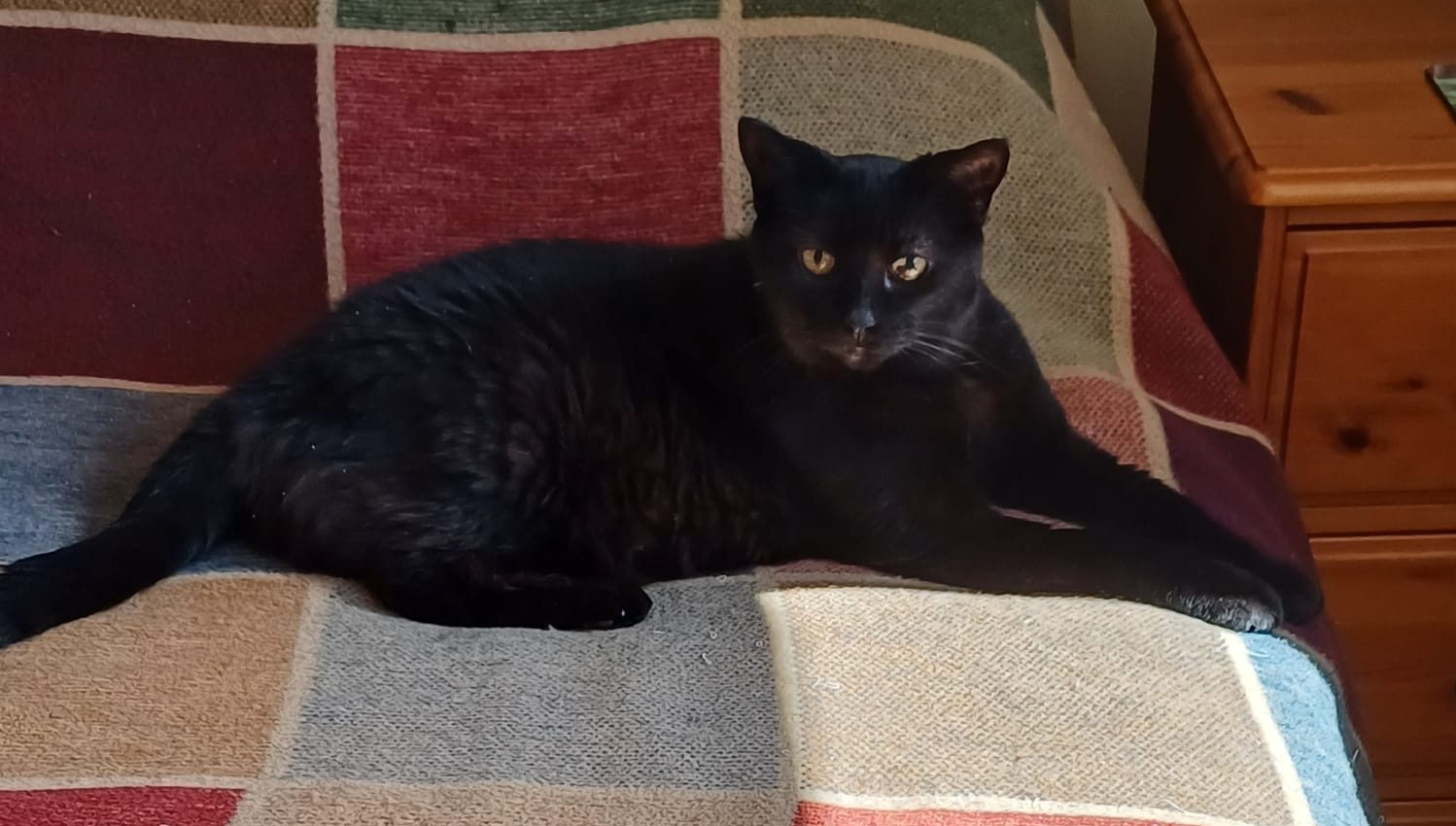
Pepper was first seen in 2024 after being referred for further investigation following the loss of use of her tail. Pepper has a complex history, she had been missing for 5 weeks in the previous year and when found only weighed 2.2 kg and had sustained trauma to her ribs and right hand side of her body. She had a guarded prognosis but remarkably pulled through. Prior to loss of use of her tail use she also had an intermittent left hindlimb lameness when going up or down stairs, and this had become more consistent and apparent in the last year. Examination at the first line Vets also detected a heart murmur.
Prior to Pepper’s initial consultation her owners had been asked to bring in videos from the home environment – as assessing lameness in our feline patients in clinic can be a lot more difficult than with our canine patients.
The videos showed a left hindlimb lameness. During the initial consultation she was moving her tail well, including being able to lift the whole tail and do smaller tail tip movements. Though at home she was reported to also be seen to just ‘hang’ the tail rather than actively use it as before.
In the first instance the priority was improving Pepper’s comfort levels. Her medication was reviewed and recommended changes communicated to her Vets. It was also recommended that Pepper have a blood pressure check and to be seen back at the first line Vets to undergo full ophthalmic examination. Treatment in clinic included electro-acupuncture and soft tissue input, with an introduction to the water treadmill and gait training being planned for the next consultation. Home environment and exercise were also reviewed during this first appointment.
A big part of any rehabilitation treatment plan should assess the home environment and aspects of this that may be difficult for our patients to navigate, especially during periods of reduced mobility/illness.
For our feline patients this is extremely important, due to their independent natures limitations may be missed as they are very good at masking pain, and avoiding certain actions whilst owners may not immediately notice.
When discussing this with Peppers owners it became apparent that she had changed various behaviours at home, such as changes to favoured sleeping spots, messing outside of the litter tray, no longer resting on the bed at night time with the owners and becoming increasingly distressed when travelling in the car to Vet visits.
We are fortunate to be accredited as a bronze feline friendly practice and to have one of our feline advocates training to become a feline behavourist. This was invaluable in helping Pepper’s owners navigate changes to her home care and to understand the importance behind these modifications to her general wellbeing and mobility. Especially with an older pet.
Often these changes are relatively simple to implement-with Pepper this involved putting steps/slopes up to her favourite resting spots, changing her litter tray to one with easier access and raising her food/drinks bowls. We also eventually introduced an automatic feeder to allow smaller more frequent meals to aid her digestion.
Our feline advocate also went through measures to help Pepper during travel to and from the Vets. The owners now utilise a pet therapy hormone with the travel carrier and in the car, have changed where they position Pepper in the car (to help with sickness behaviours displayed) and utilise a cover over the carrier while travelling. These are again small changes but they can have a big impact.
Peppers owners report she is much happier at home with the implementations of these measures.
Pepper responded remarkably well to initial treatment, especially the acupuncture, with full use of her tail quickly returning. She also adapted incredibly well to water treadmill sessions in clinic that helped to target and strengthen an appropriate gait pattern, particularly in the hind limbs. We always carefully manage this aspect of our treatment with all patients, but more so with our feline patients-preparation is key to avoid stressors and to manage the environment to allow the best chance of success.
Over the last 9-12 months Peppers clinical presentation has been variable, with other age associated changes needing to be considered alongside treatment, but her owners have remained dedicated to positively managing this at home and with further treatment input with us where needed. Pepper is now seen on a maintenance basis, when needed – which can be once a month or once a week depending on how she is. This is always carefully managed in communication with her first line Vets, so everyone has a full clinical picture and can best manage her conditions.
It is fair to say that Pepper keeps defying the odds and proves that you can also teach an old cat new tricks!