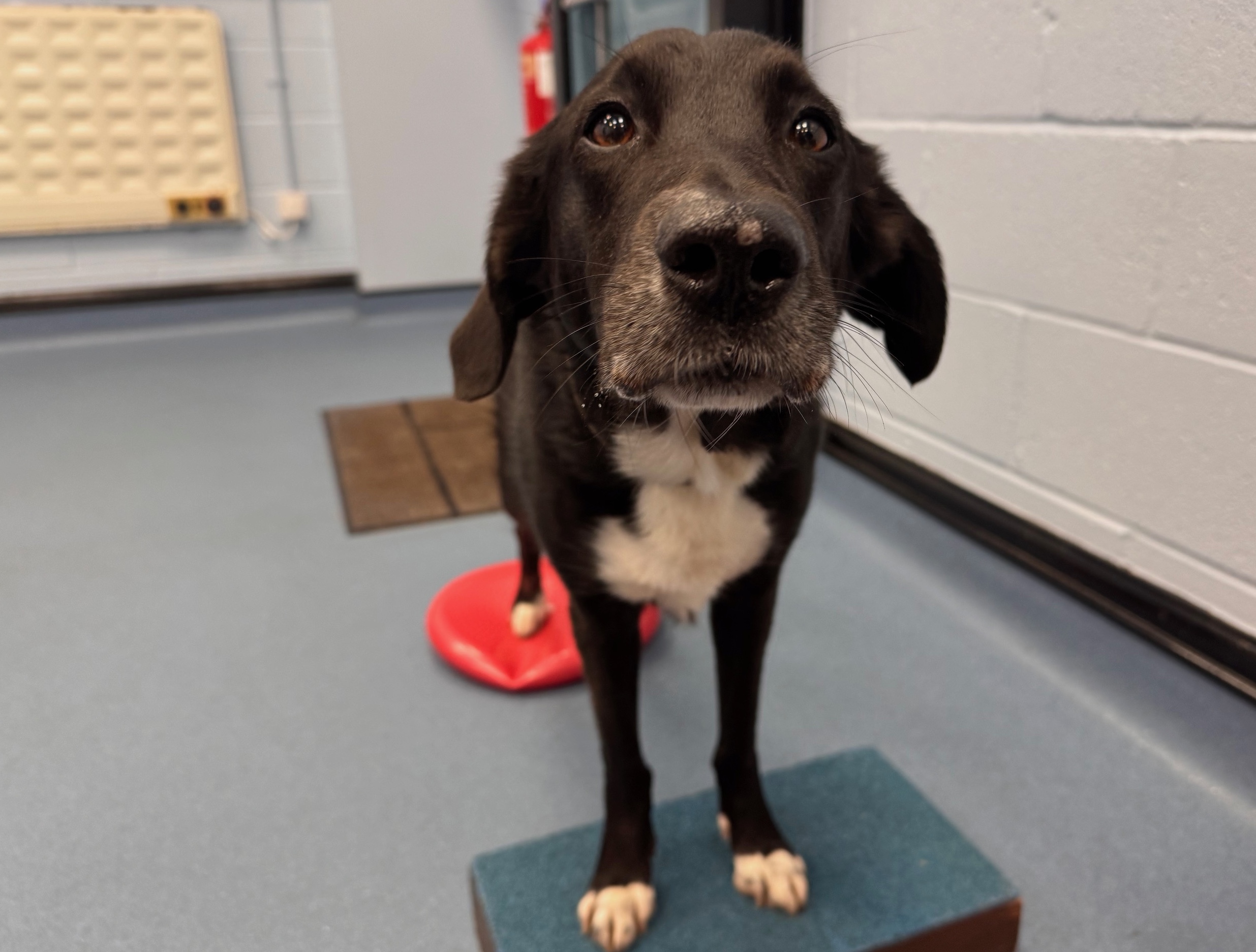
Iggy presented with complex behavioural barriers to rehabilitation. As a rescue with an unknown history, he displayed high levels of anticipatory anxiety regarding any formal handling, and suspicion around being offered food. It was evident that prior experiences had likely included food to lure him into position for handling that was uncomfortable and/or painful, leading to a breakdown in trust.
At his first line vets, Iggy requires a muzzle for all handling and procedures and displayed defensive behaviours at home, specifically when owners attempted to touch or support his hindquarters. This created a bit of a challenge for the physical manipulation required for IVDD recovery.
In order to make any progress with Iggy’s condition, we had to first establish a trusting relationship. By removing the muzzle and initially taking a ‘hands-off’ approach, we were able to listen to Iggy’s communication and learn his boundaries. This allowed him to communicate via subtle body language (going still, whale eye) rather than escalating to a bite because he felt ‘trapped’.
Use of the Laser as a ‘Bridge’: The laser can be an incredibly useful tool because it is non-contact and ‘novel’ (no prior painful associations), and this allowed for therapeutic benefits while respecting Iggy’s current intolerance for physical contact.
Desensitization & Counter-Conditioning (DS/CC): Owners were given some homework with a ‘neutral stimulus’, using a pen to mimic the laser at home. By pairing this neutral object with high-value treats and praise, we transitioned his response from fear to positive anticipation.
Proprioceptive Conditioning: To lower Iggy’s stress levels, each session began with a ‘Proprioceptive Track.’ This task-oriented exercise focused on movement rather than touch or being expected to stay still, and was a purposeful technique designed to build Iggy’s confidence, thus developing a bond with his handlers, and establishing a predictable clinic routine.
The shift toward a consent-based approach yielded substantial clinical improvements in just a few short appointments.
Tolerance of Close Proximity: Iggy’s stress levels decreased enough to allow for soft tissue massage and hydrotherapy.
Novel Environment Acceptance: Despite his handling history, Iggy accepted the use of a supportive sling within the underwater treadmill
Advanced Consent: Perhaps the most significant milestone was Iggy’s acceptance of acupuncture. Even during a pain setback, he remained calm and cooperative, demonstrating a high level of trust in his handlers.
Iggy’s case illustrates that working at an individual’s pace pays off in the long run. By listening to him saying ‘’no’’, we eventually earned a ‘yes’, even during periods of physical discomfort. Iggy is now managed with a flexible, appointment-by-appointment approach. This acknowledges that both pain and anxiety are dynamic variables, ensuring his rehabilitation remains a positive, low-stress experience, with the best results for everyone involved.