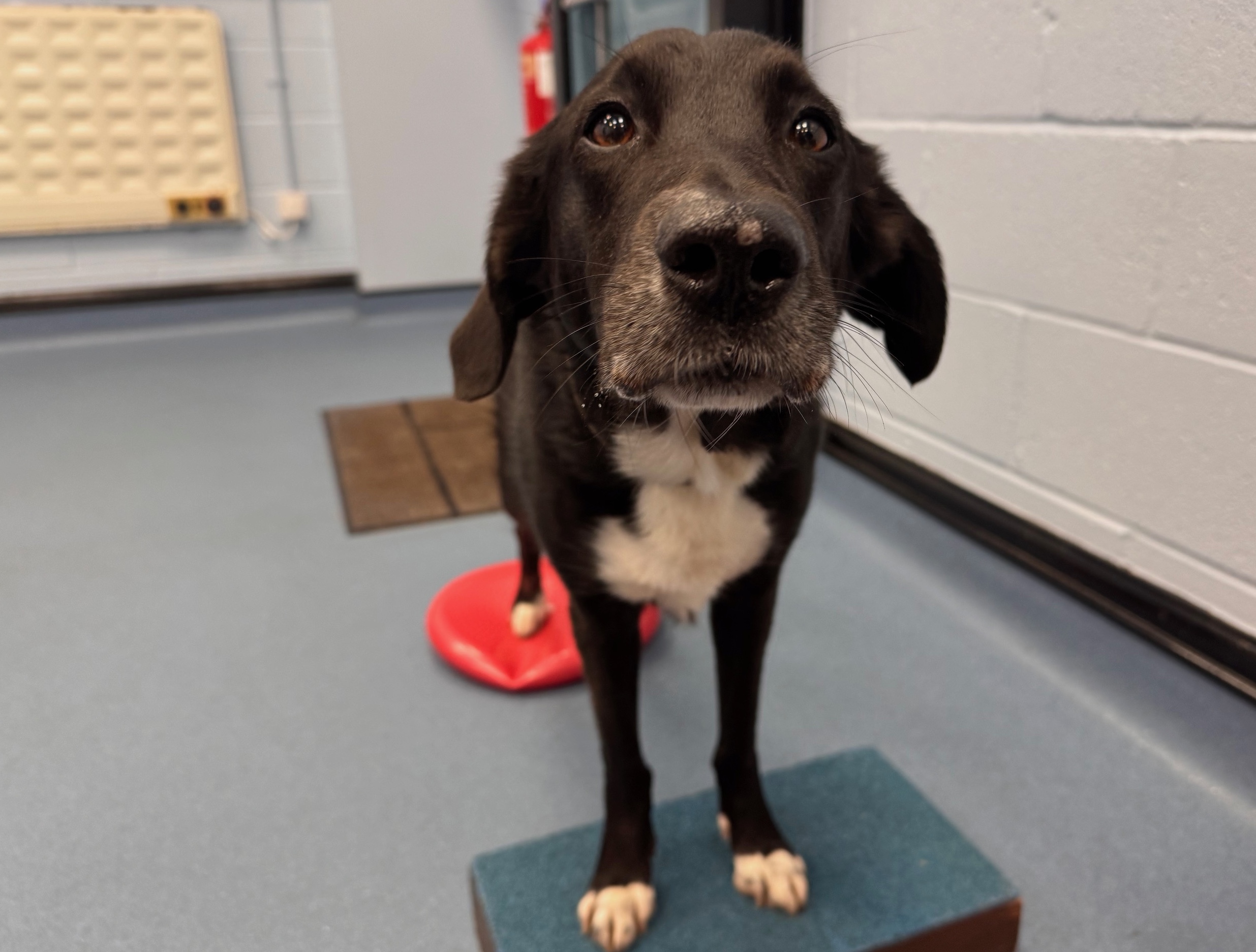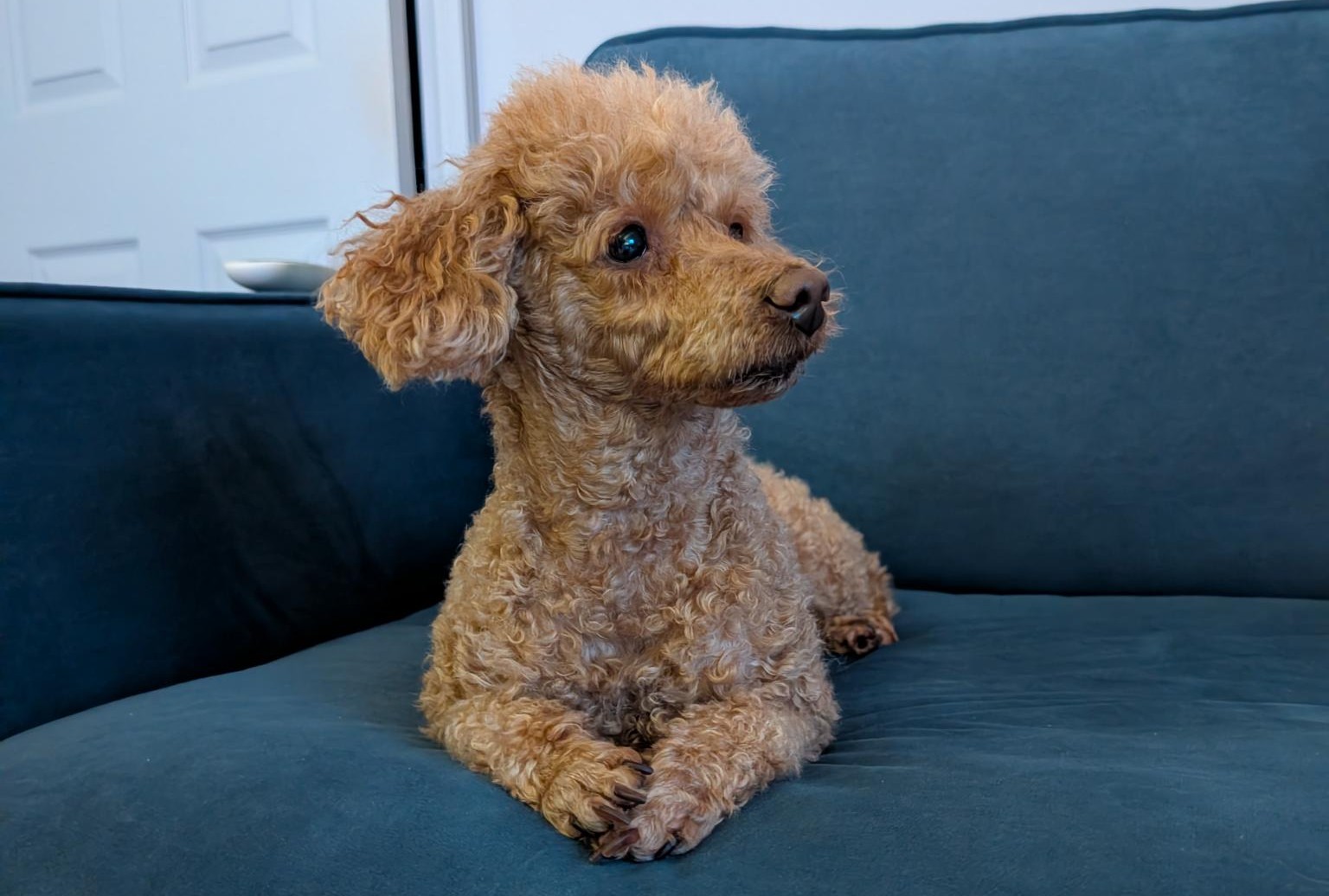
Eton is a 6kg Toy Poodle who presented with a long-standing history of discomfort and behavioural change following a traumatic dog attack five years ago. The injury affected the caudal (rear) half of his body, including a significant wound at the base of his tail which healed over time. Although the visible injuries resolved, his owner began to notice ongoing changes that suggested Eton was still experiencing discomfort.
Since the incident, Eton developed a number of behavioural and physical changes. He became reactive when other dogs approached his hindquarters, would suddenly turn to bite at his rear, and showed increased sensitivity during play. He was reluctant to roll onto his back and avoided standing on his hindlimbs. His owner also noticed that he would cry during certain movements, was more restless at night, and became increasingly hesitant to jump onto furniture. Over the past three years, his mobility gradually declined, with intermittent flare-ups that required veterinary treatment. These episodes were managed with anti-inflammatory medication, but the pain would return once the medication was stopped, suggesting an ongoing underlying issue rather than a short-term problem. Previous X-rays raised suspicion of a spinal condition (discospondylitis), although further imaging has not been carried out.
On examination, Eton was bright, alert, and otherwise in good health, with a body condition score of 4 out of 9. However, his posture and movement highlighted clear areas of concern. He stood with a hunched (kyphotic) posture and shifted his weight forwards onto his front limbs, taking pressure off his hindlimbs. When walking, both hindlimbs moved in a circumducted (swinging) pattern rather than stepping normally, and there was reduced movement through his spine, particularly at the thoracolumbar (mid-back) region. When turning, he became less stable and tended to speed up to compensate, with a lower head carriage indicating reduced confidence and control. He also showed signs of overtracking, where the hindlimbs step too far forward due to limited spinal flexibility and coordination.
On palpation, there was clear evidence of muscle tension and compensation throughout his body. The muscles in his chest (pectorals), sides (latissimus dorsi), and lower back (lumbar region) were tight and overactive, with some areas feeling banded or in spasm. In contrast, the muscles in his hindlimbs, particularly the quadriceps and gluteal muscles, had reduced muscle mass, indicating weakness and underuse. Neuromuscular recruitment (how effectively the brain activates the muscles) was reduced in the left hindlimb compared to the right. There was also restriction in normal shoulder movement (scapular glide), reduced ability to lift through the chest (sternal lift), and stiffness through the ribcage and spine. Neck flexibility was mildly reduced.
Taken together, these findings indicate chronic spinal pain with long-term compensatory movement patterns. Due to discomfort and instability in his hindlimbs, Eton had adapted by shifting his weight forwards onto his forelimbs. Over time, this has led to overloading and tightness in the front of the body, while the hindlimbs have become weaker due to reduced use. This cycle of compensation is a common feature in chronic pain cases and can progressively worsen without targeted intervention.
A multimodal treatment plan was implemented to address both pain and function. Acupuncture and laser therapy were introduced to help reduce pain, help with inflammation, and support the nervous system. Neuromuscular gait training was started to begin retraining more normal and efficient movement patterns. A tailored remedial exercise programme was also prescribed for the owner to carry out at home, focusing on improving strength, coordination, and stability.
In addition to physical therapies, Eton’s pain management was optimised with the introduction of paracetamol to help control breakthrough pain, particularly in the evenings or after increased activity with plans to review and adjust the dose depending on his response.
The initial focus of treatment is to reduce muscle tension and improve comfort, allowing Eton to move more freely. As his comfort improves, the aim is to gradually encourage better use of his hindlimbs and rebuild strength, helping him return to a more normal and functional gait. Future sessions will also incorporate hands-on soft tissue therapy to further address muscle tightness and support his rehabilitation.
Eton’s case highlights how past trauma can have long-term effects on both movement and behaviour. Chronic pain is not always obvious and may present as subtle changes such as reactivity, reluctance to perform normal activities, or changes in posture and movement. By addressing both the underlying pain and the compensatory patterns that develop over time, we can significantly improve comfort, mobility, and overall quality of life.
At SMART Veterinary Clinic, we take an individualised, evidence-based approach to each patient, combining therapies such as acupuncture, rehabilitation, and pain management to treat the whole patient, not just the symptoms.