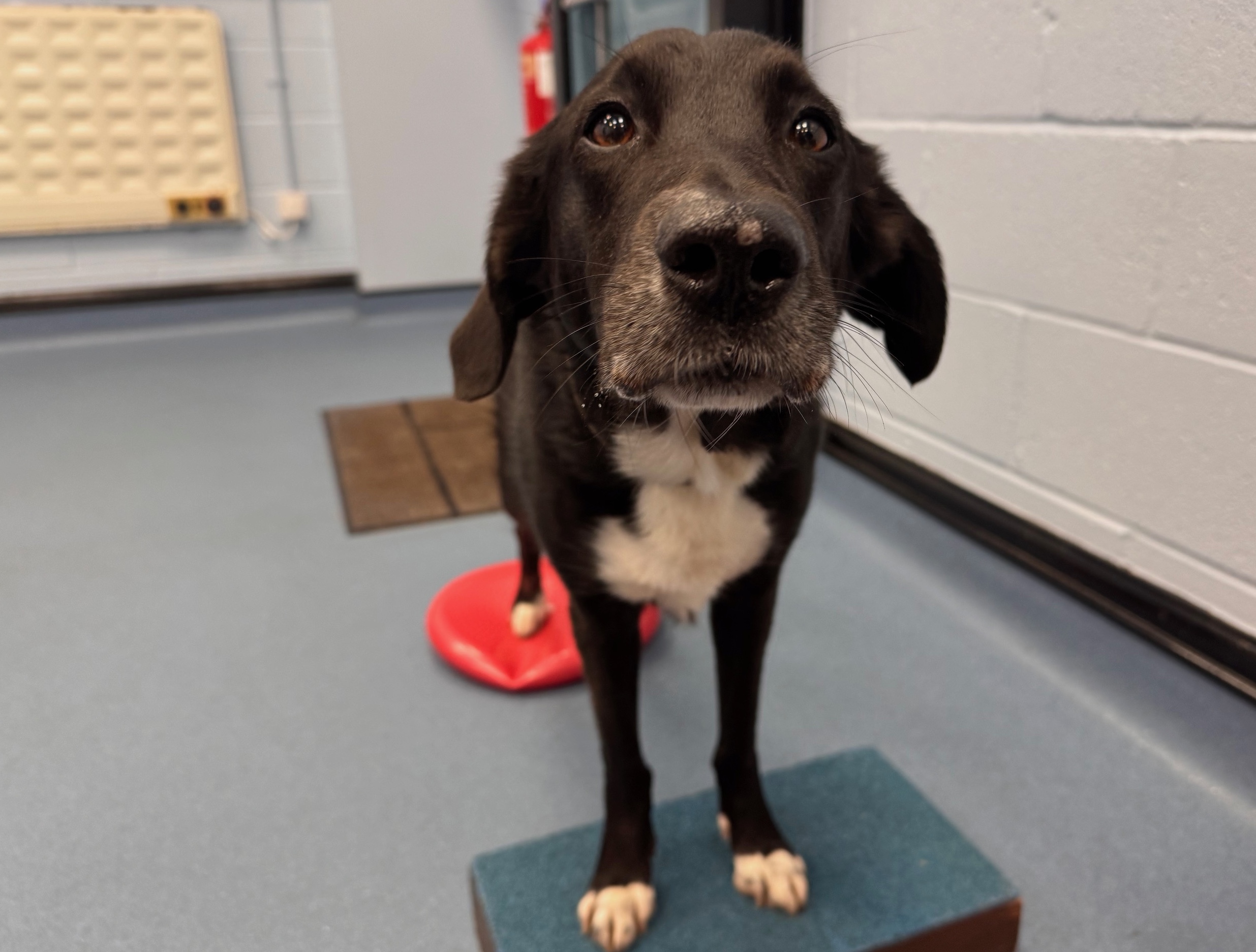
Finn is an 8 year old male neutered collie cross and has been a long-term patient at the SMART clinic. He was initially referred after a short term right hindlimb lameness with a more chronic stiffness occasionally seen after intense exercise. He had radiographs of his hips and stifles prior to referral which revealed no abnormalities. He was initially found to have marked discomfort through his lumbar paraspinal muscle in particular and was managed conservatively with acupuncture, water treadmill and massage, along with stretches to start at home. He showed a marked improvement and returned to normal exercise and some agility. Approximately a year later he developed crepitus on hock flexion and had repeat radiographs at his first line vets to include the hocks and lumbar spine. The only finding was a very small radiopaque lesion seen within the area of the Achilles tendon in this right hindlimb.
This mineralisation was investigated further at the SMART clinic with both diagnostic ultrasound and thermal imaging which revealed a small tear in his gastrocnemius and some chronic inflammatory changes within the superficial digital flexor tendon, seen as fibrosis with mineralisation. Thermal imaging was also supportive of a reduction in blood flow through the right Achilles when compared to the left. These were all likely to be chronic adaptive changes rather than an acute new injury. His rehabilitation programme was adapted to include therapeutic ultrasound and targeted physiotherapy exercises including plyometrics to encourage tendon strengthening and repair.
A few years later he began to develop remodelling associated with osteoarthritis in both hocks. While he has stopped high impact exercise, he continues to enjoy long walks supported by his rehabilitation programme. He continues to have regular treadmill alongside soft tissue therapy and acupuncture every 2-4 weeks, and his owner notices a marked improvement in his comfort and a reduction in need for pharmaceutical pain relief medications in the week or two following his appointments. He has likely had very mild OCD changes not visible on the radiographs taken initially and his movement patterns have been compensatory. Regular maintenance focused on strengthening him through the hindlimbs and reducing the compensatory tension through his back has allowed him to retain his mobility and quality of life and likely delayed the point at which pharmaceutical intervention was needed.